Arctic Grey Porsche 992 GT3 RS Weissach: Bulk Custom-Cut XPEL Ultimate Plus PPF Redo and XPEL Windshield Protection Film
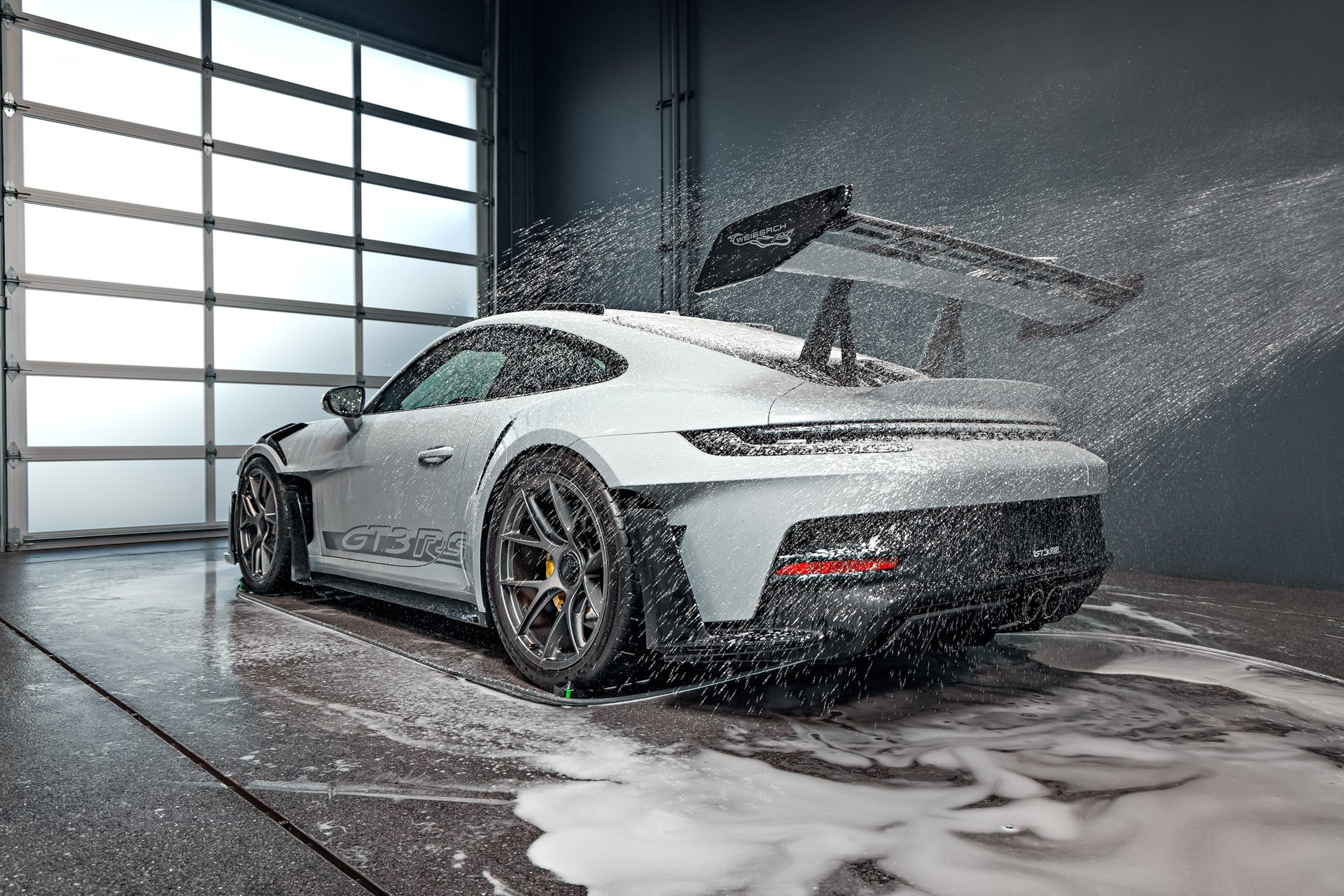
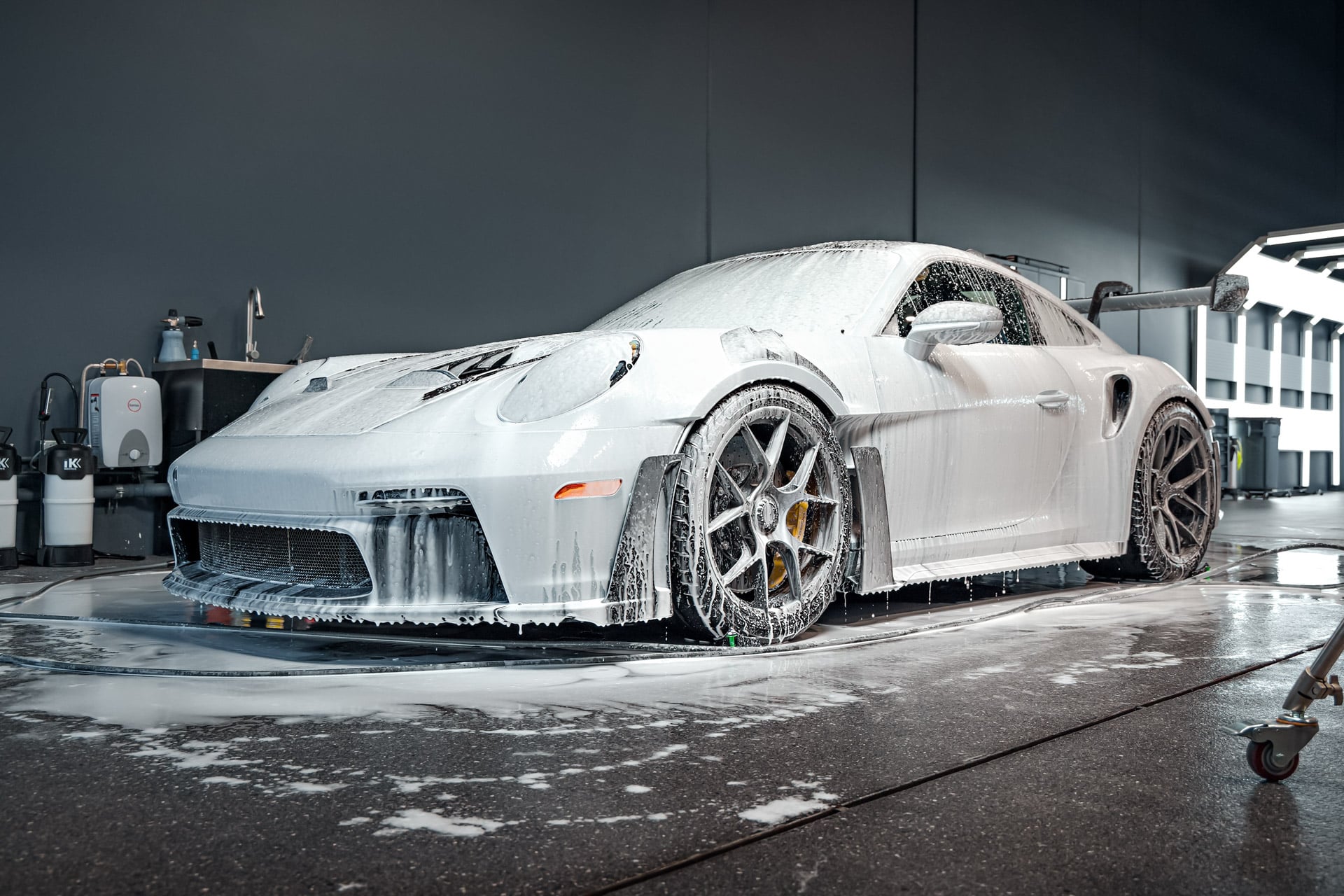
Not every paint protection project starts with bare paint. This Arctic Grey Porsche 911 GT3 RS Weissach arrived at our Los Angeles facility already wearing film, a pre-cut installation that the owner wanted replaced. The brief was simple and uncompromising: remove every piece, take the car apart panel by panel, and start over with bulk custom-cut XPEL Ultimate Plus Paint Protection Film (PPF) shaped to this specific car, then finish the glass with XPEL exterior windshield protection film. It is the kind of job that separates film that merely covers a car from film that disappears on it.
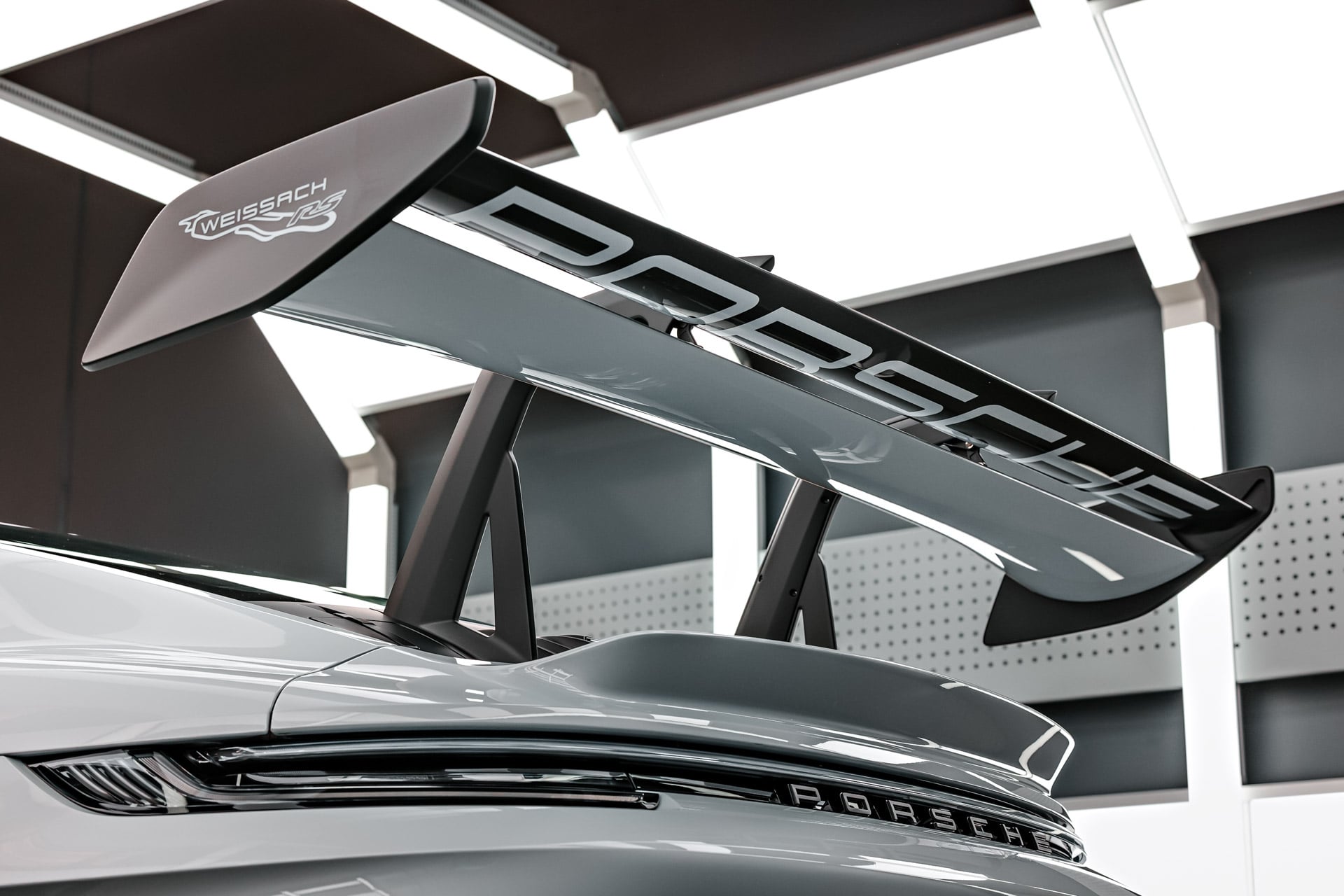
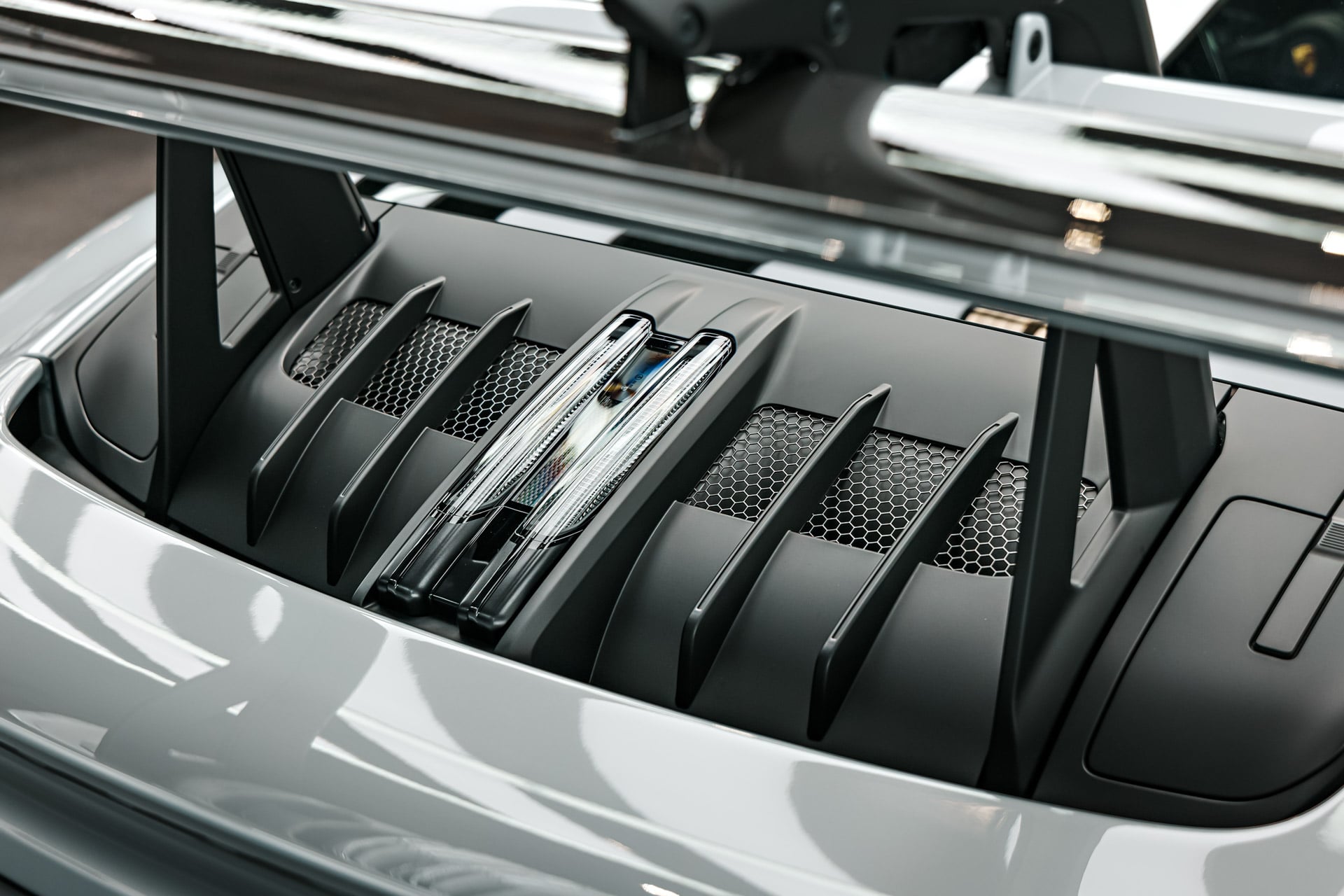
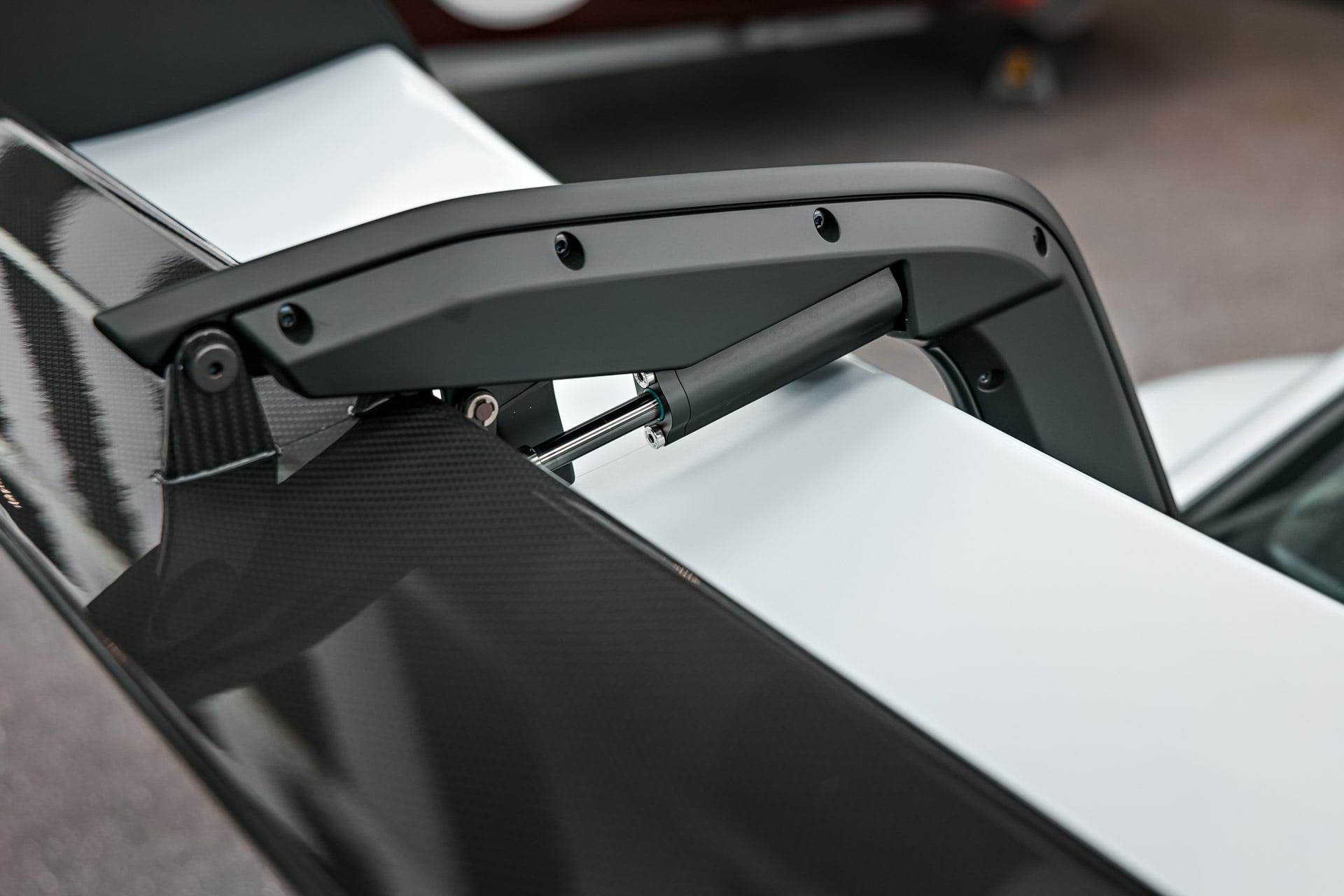
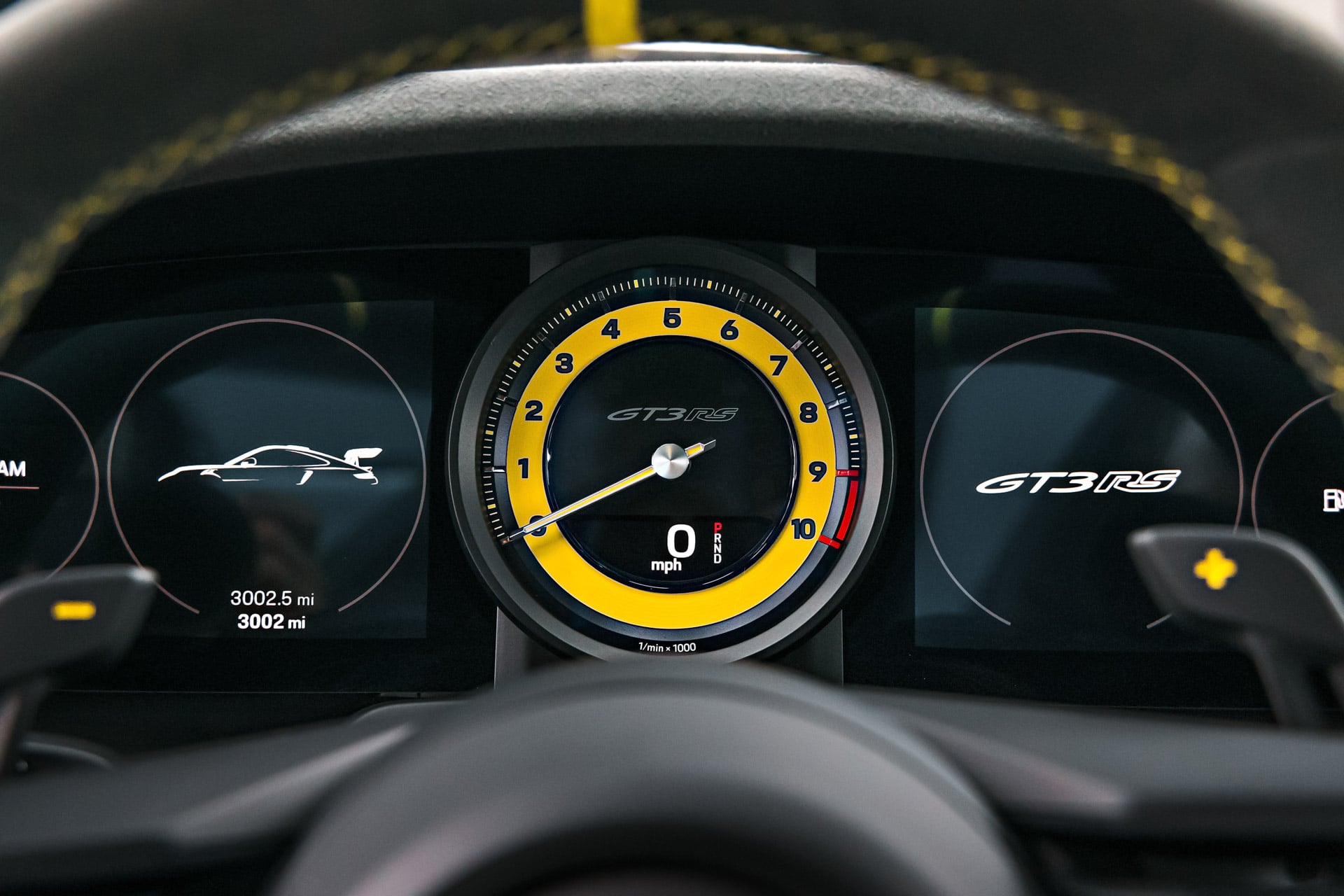
A car like this earns the effort. The 992-generation GT3 RS is built around a 4.0-liter naturally aspirated flat-six that revs to 9,000 rpm and makes 518 horsepower (525 PS) and 342 lb-ft (465 Nm) of torque, sent to the rear wheels through a seven-speed PDK dual-clutch, the only transmission offered. Porsche quotes 0-60 mph (97 km/h) in 3.0 seconds and a top speed of 184 mph (296 km/h), with curb weight around 3,200 to 3,300 lb (1,450 to 1,500 kg), depending on specification. What makes the RS special is how it uses those numbers: a double-decker rear wing with a Drag Reduction System, aggressive front aero, and enough downforce to make a road car behave like a Cup racer.
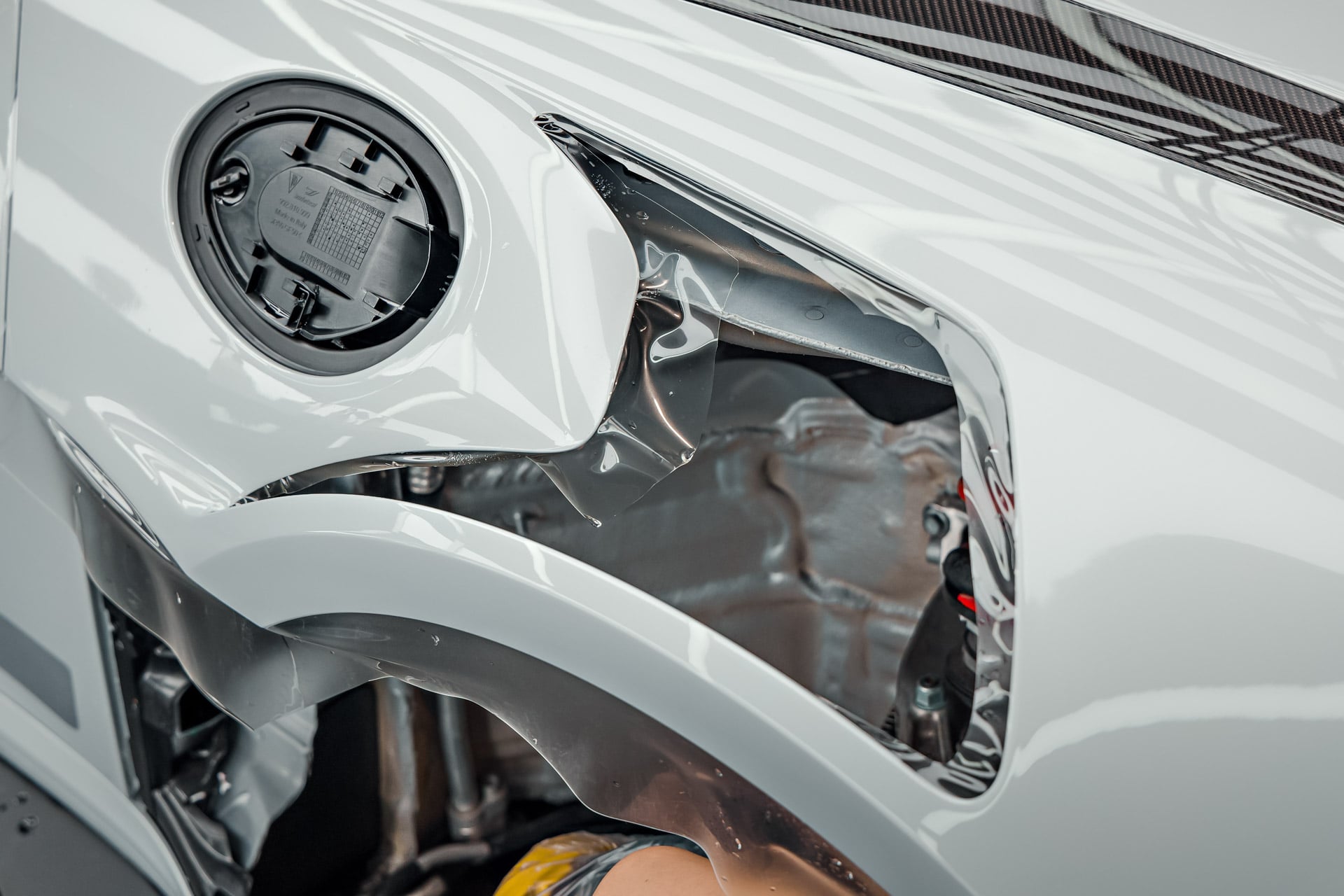
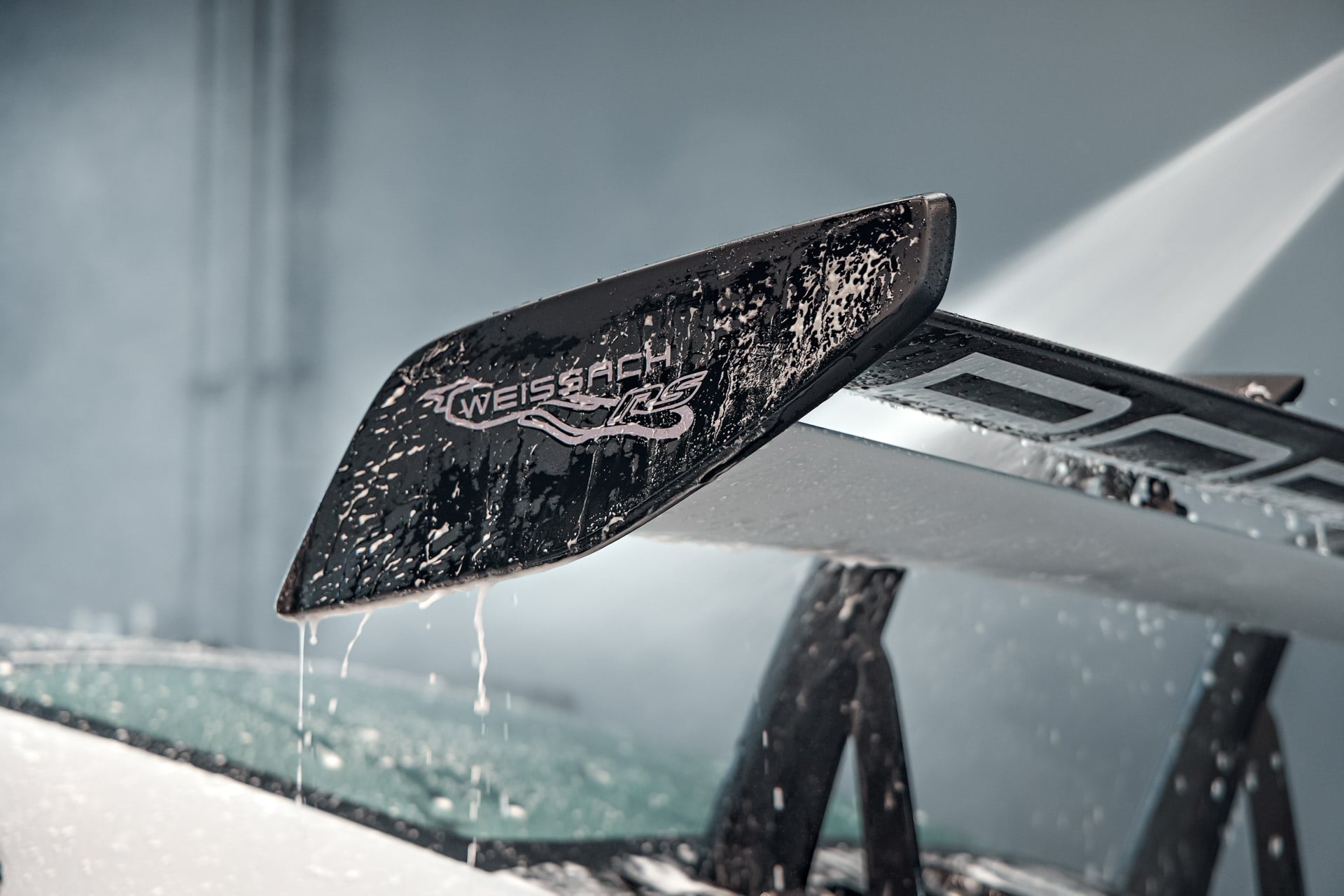
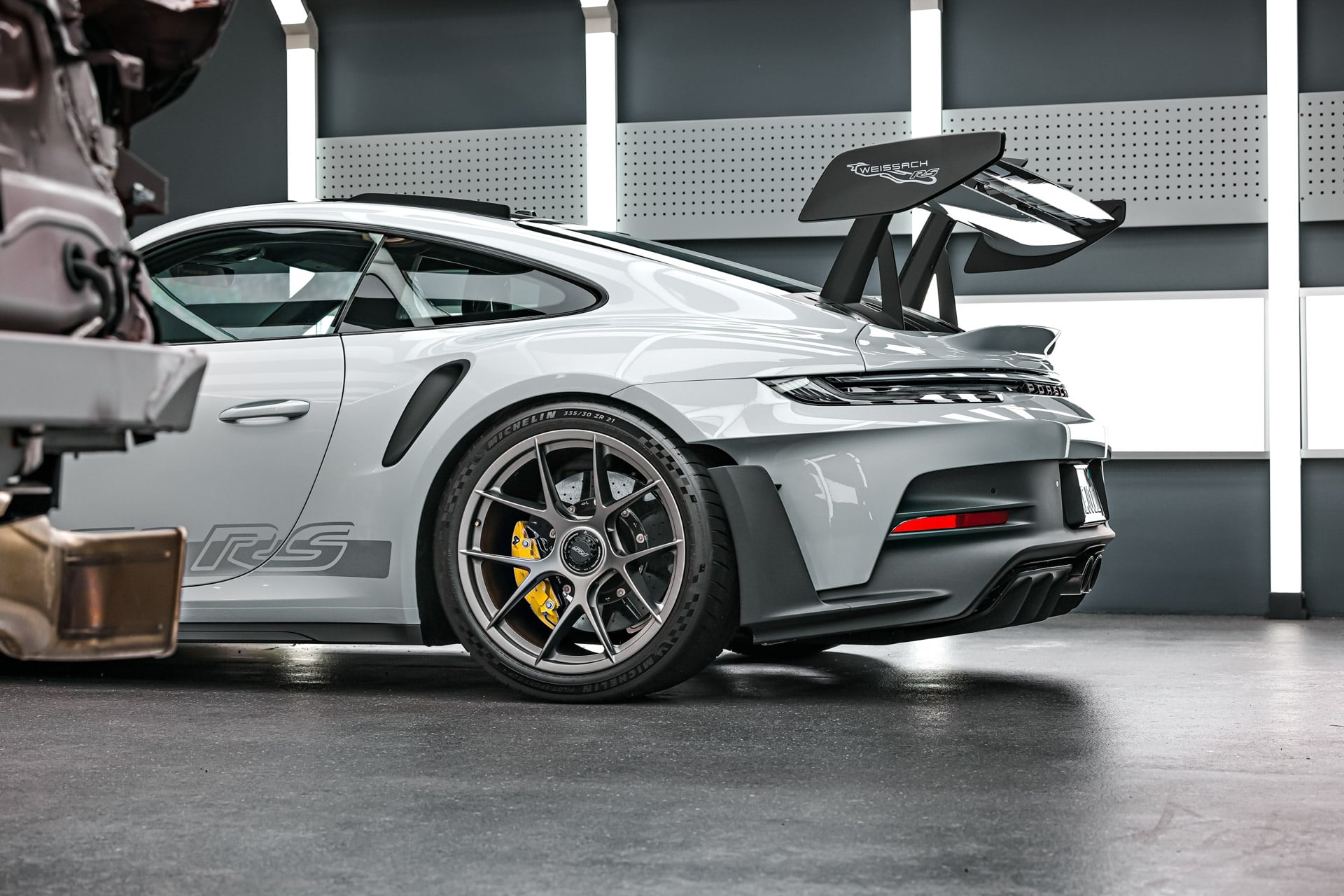
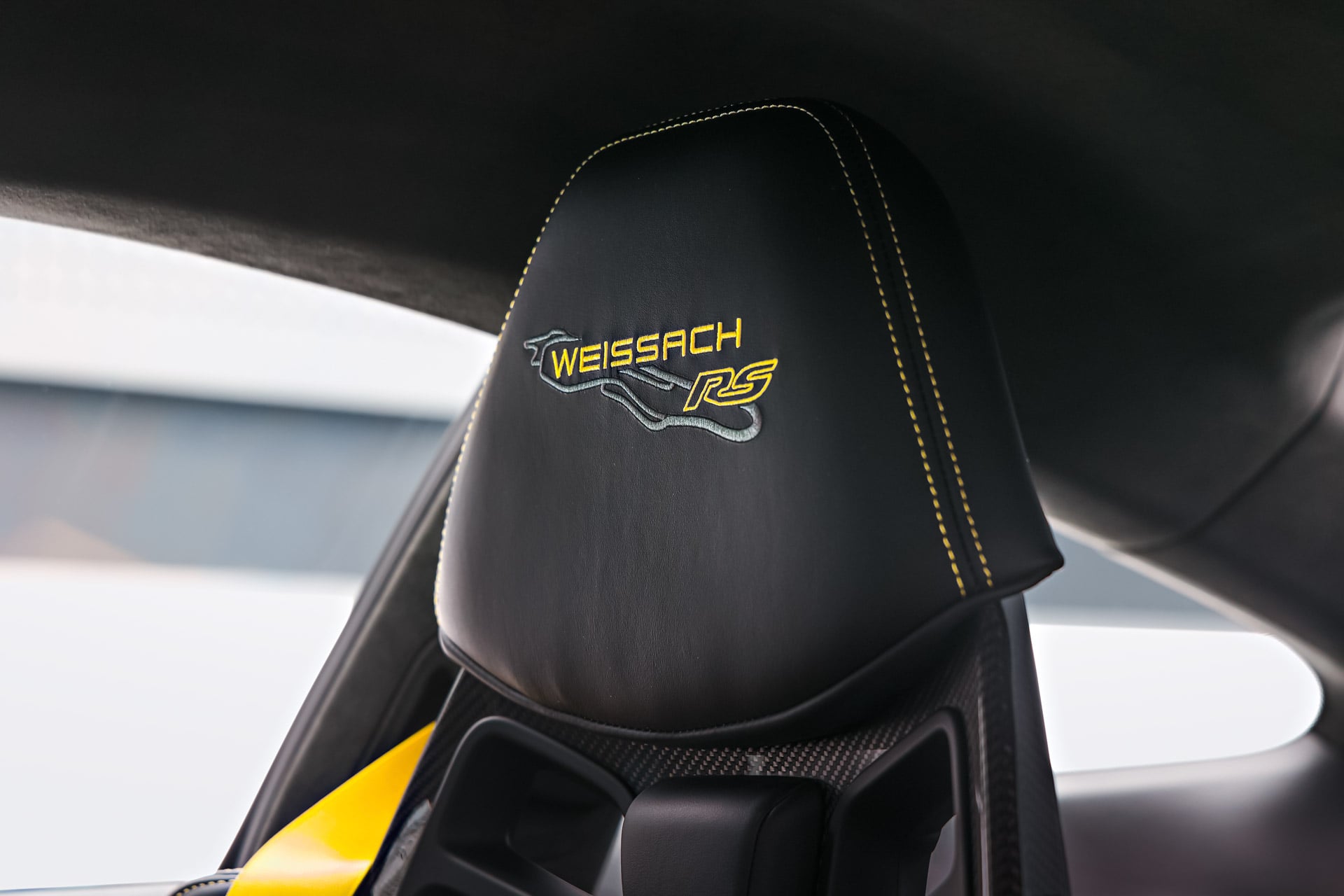
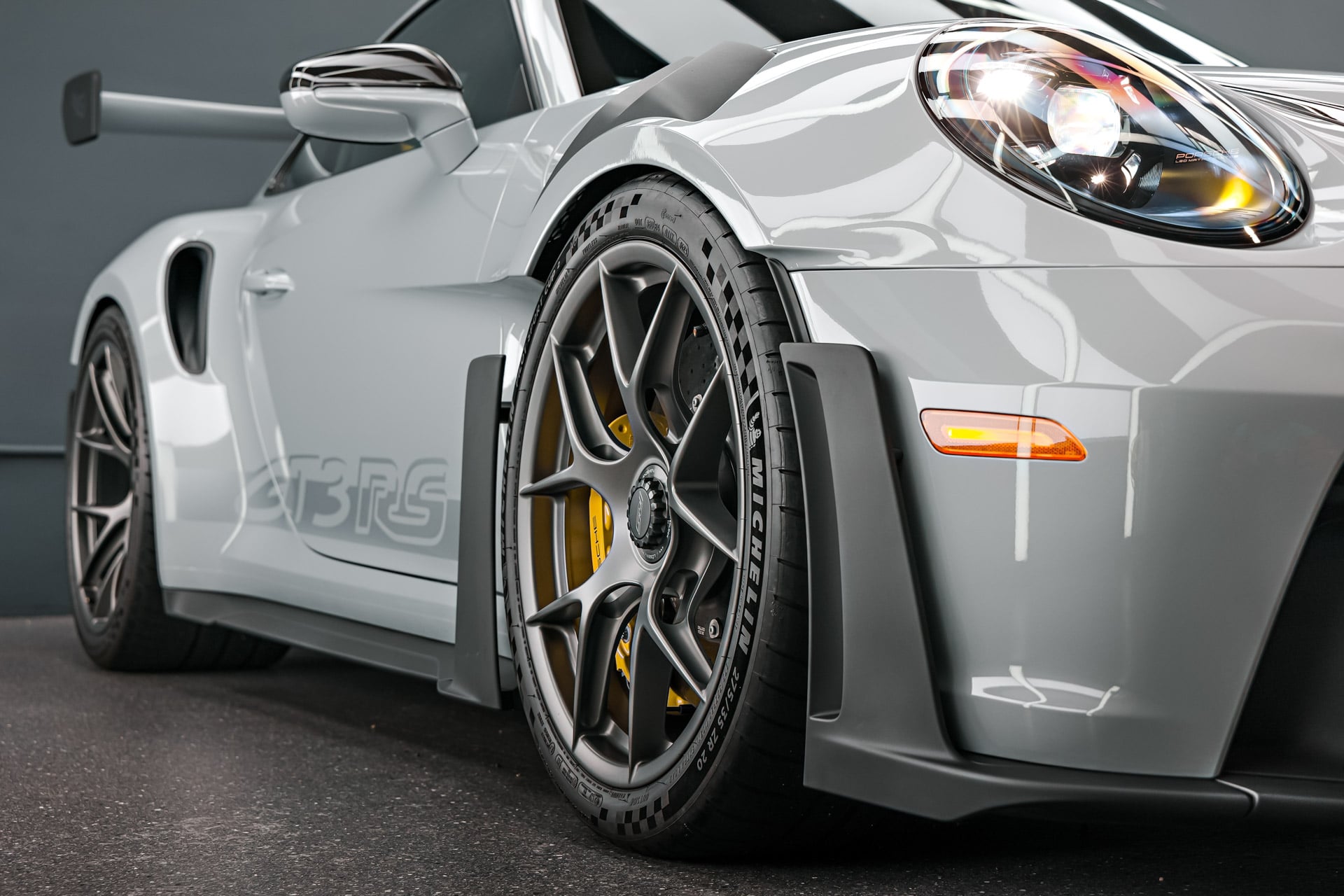
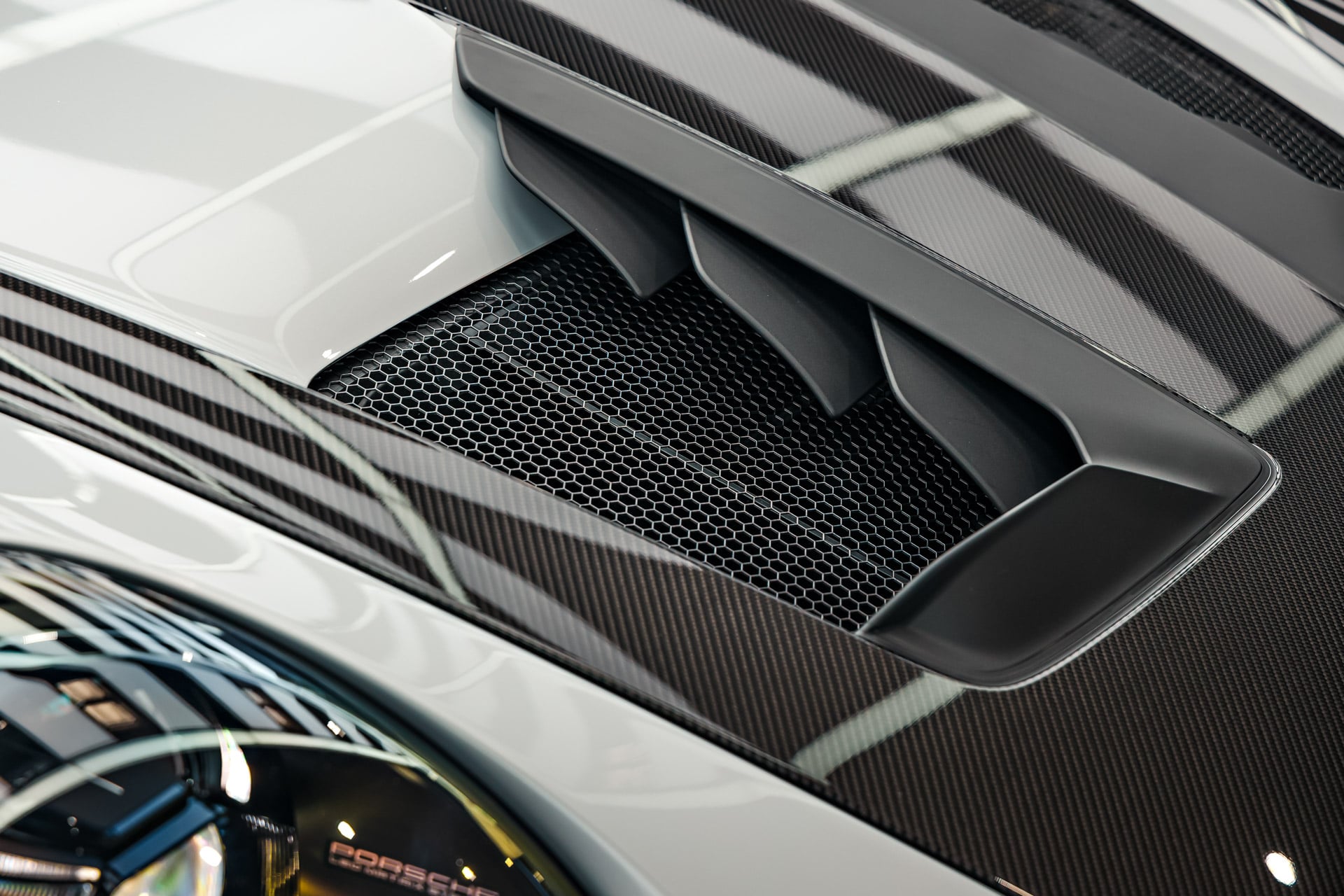
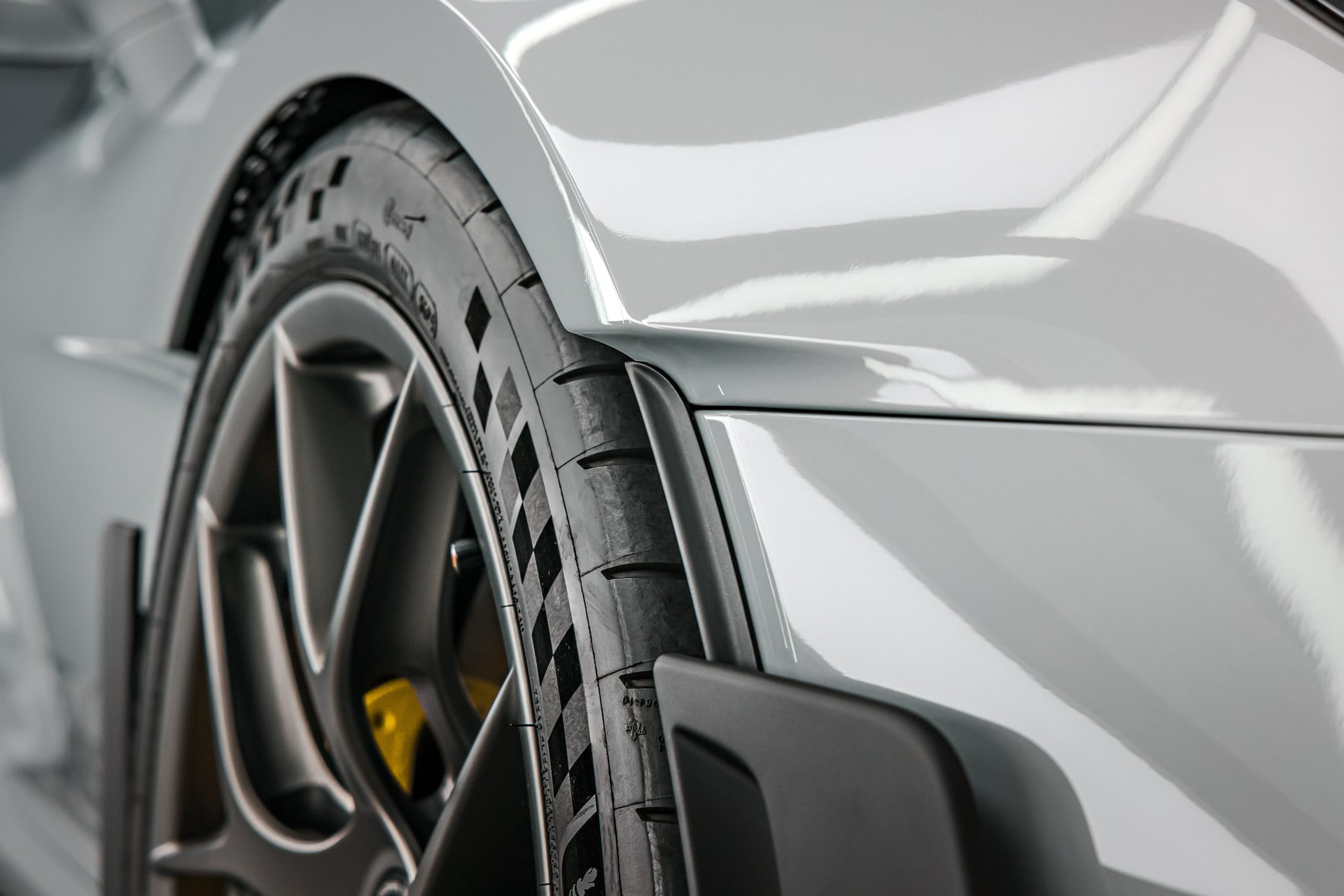
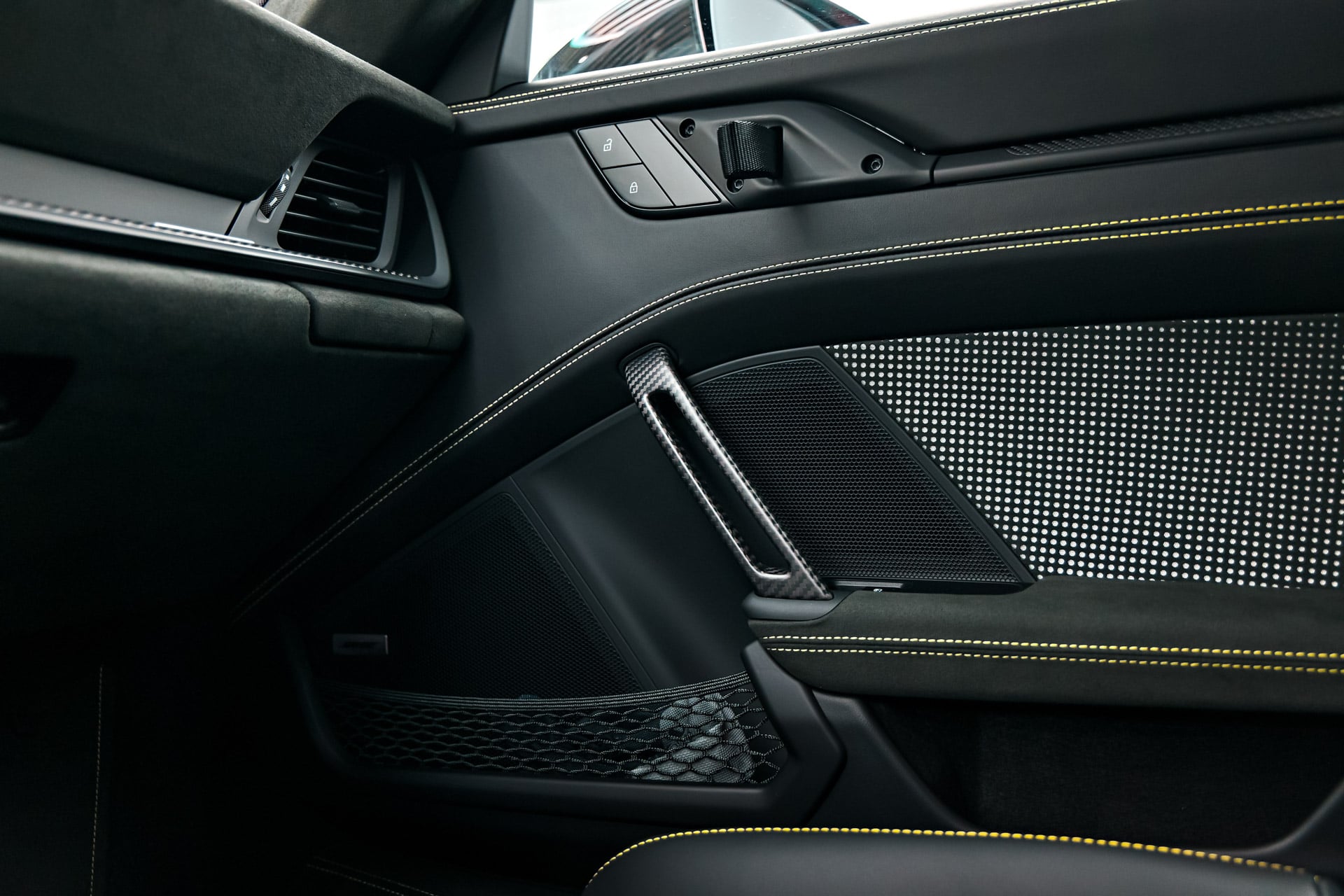
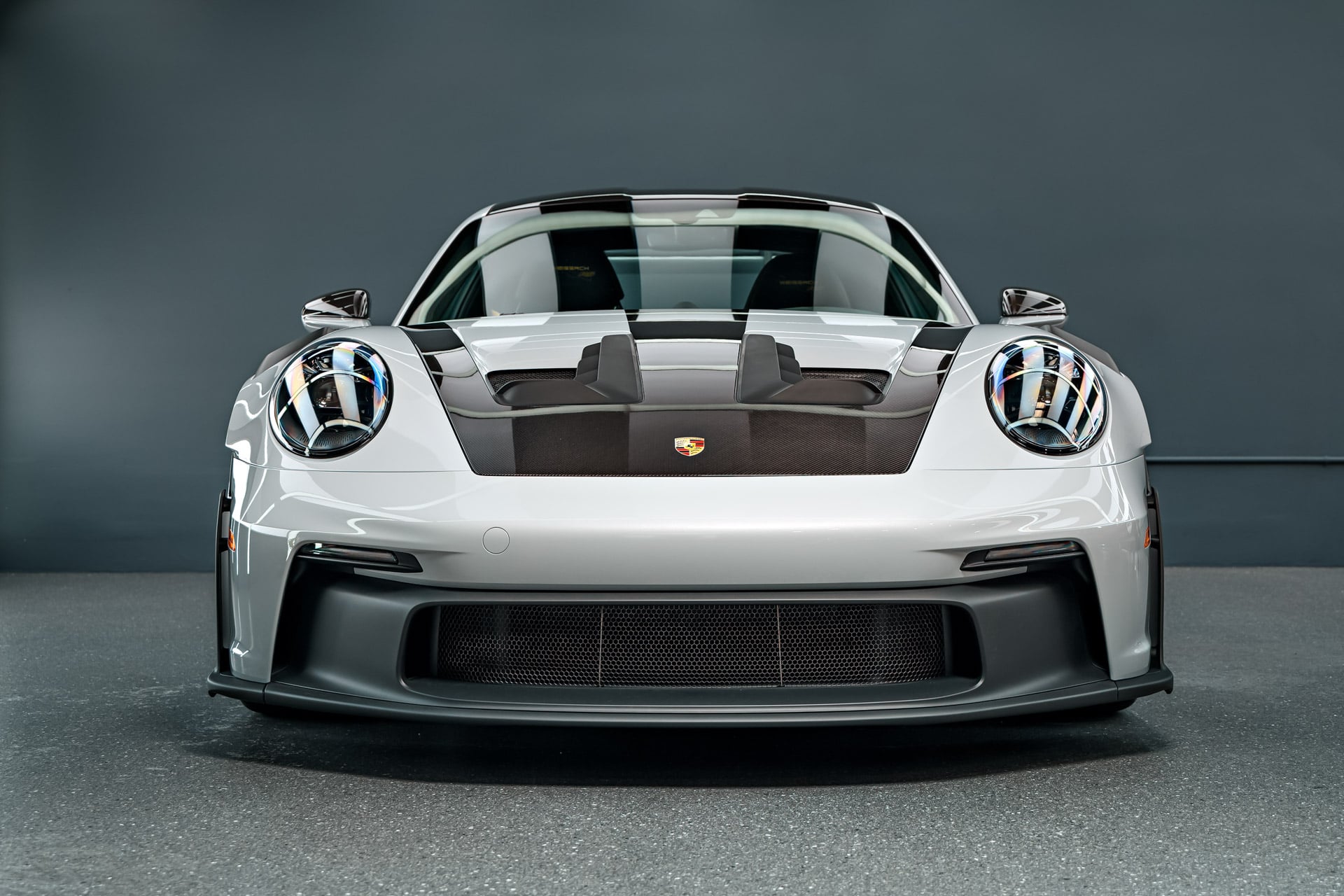
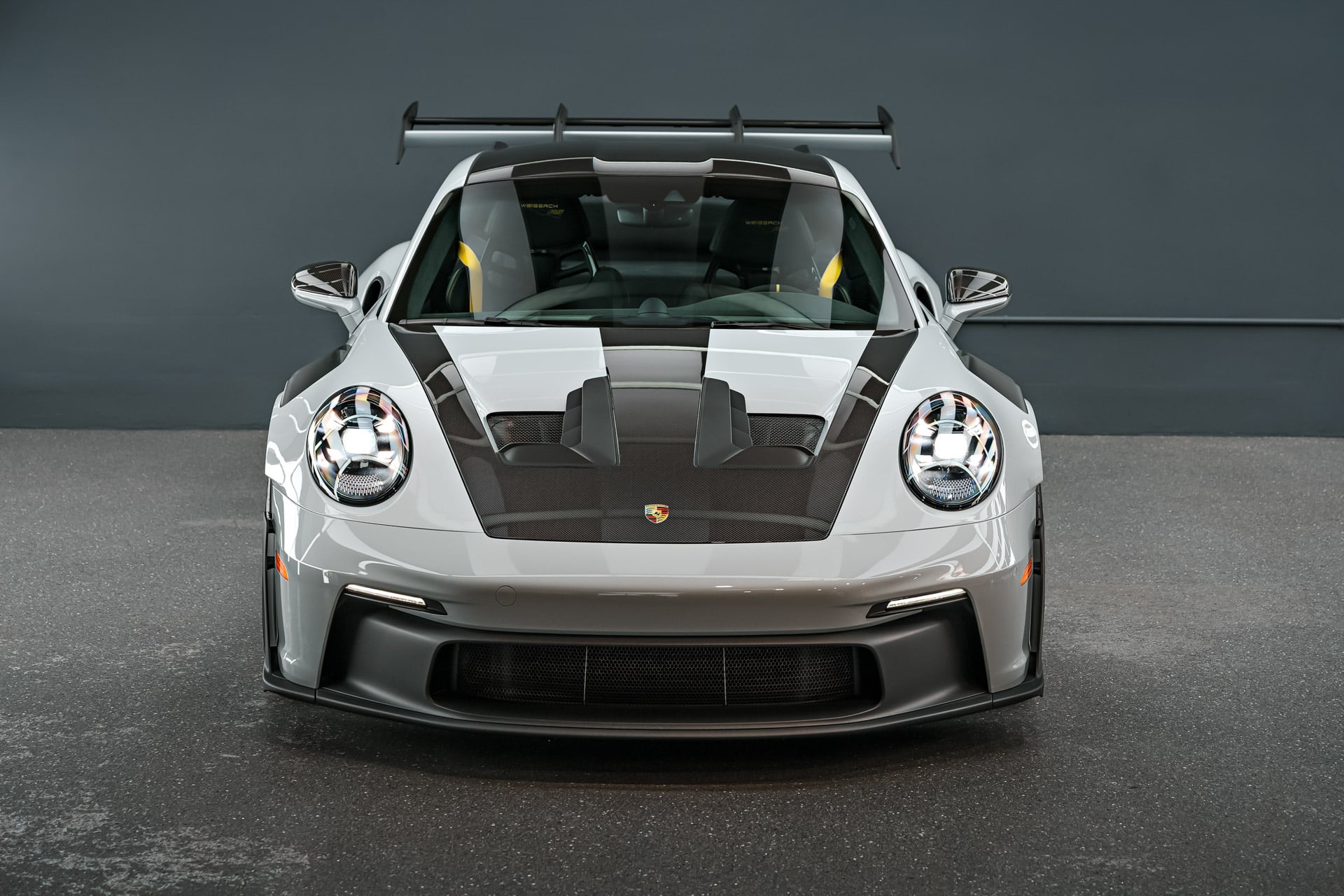
The Weissach Package pushes the idea further. It swaps painted carbon for visible carbon fiber on the front lid, roof, and upper mirror shells; adds the Weissach logo to the rear wing; adds carbon fiber anti-roll bars and rear axle components to cut weight; and unlocks the optional forged magnesium wheels. It is also expensive. A 2025 GT3 RS starts at roughly $225,000, and the package added about $34,700 on one 2025 window sticker, which puts a Weissach car well past $255,000 before any other options. This one is finished in Arctic Grey, a solid, non-metallic light gray with a cool undertone that Porsche introduced on its GT cars, with a darker gray RS stripe down the flanks, sticky Michelin Cup rubber, and yellow-calipered brakes behind the wheels. A car with that kind of price tag and detail deserves film installed to the same standard.
Why the Pre-Cut Film Had to Go
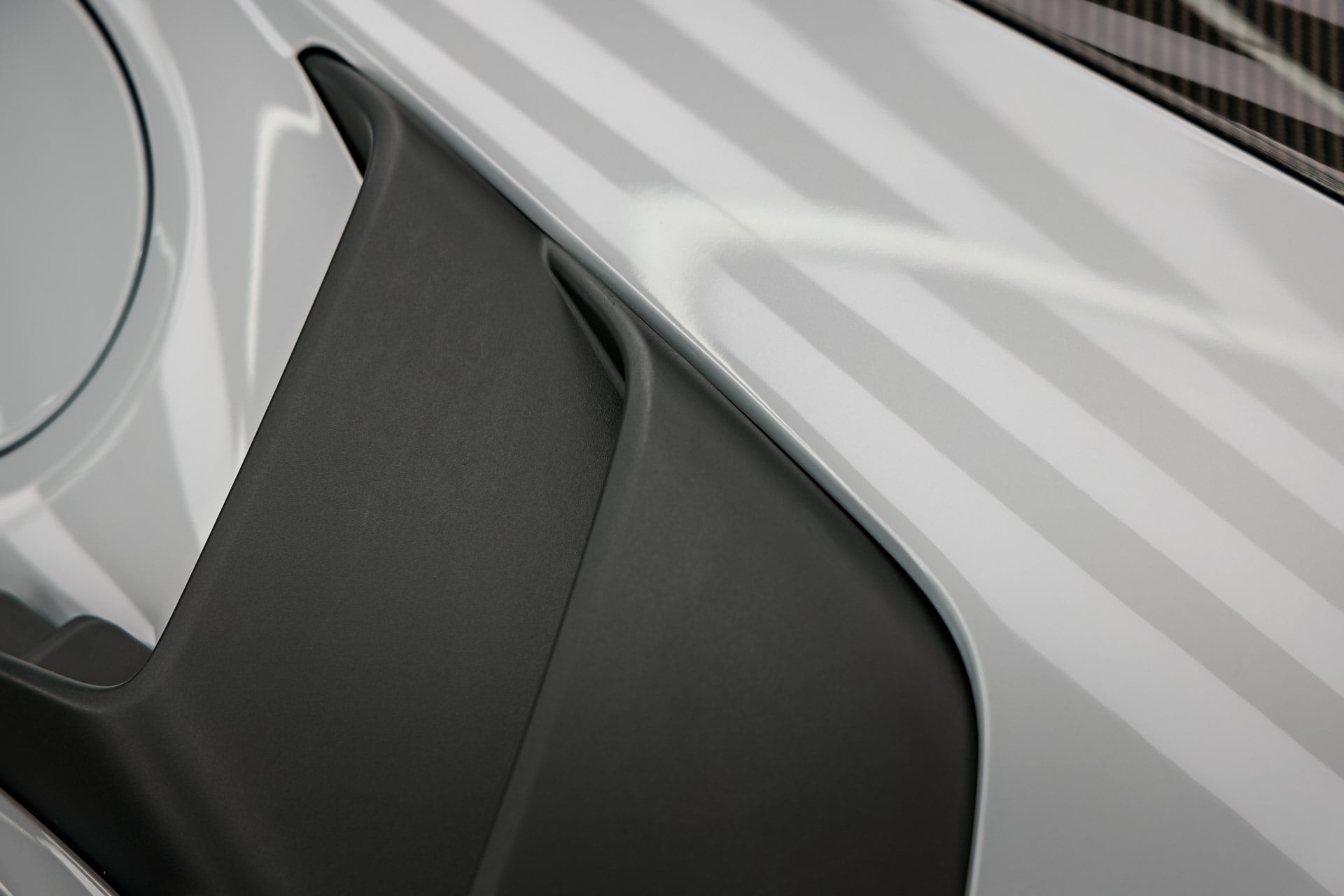
Pre-cut plotter patterns have their place. On a stock vehicle with simple panels, they can deliver a clean result. The GT3 RS is not that vehicle. Its front bumper is a maze of intakes and edges, the fenders flare outward, the rear quarters carry large intake vents, and every panel is expected to look flawless under a showroom light. Pre-cut film is cut to a template, and a template can only approximate the real panel in front of the installer. Edges stop short, seams appear where the pattern ends, and the film is never stretched past the panel boundary to wrap around it. On a car this exacting, those compromises are visible, and they invite dirt, lifting, and doubt.
So the old film came off first. Removing a full pre-cut installation is slow work. Controlled heat softens the adhesive, the film is peeled low and slow so the paint is never stressed, and every trace of adhesive residue is cleaned away before anything new goes on. Only then does the real preparation begin. With the car stripped back, our team inspected every painted surface under high-intensity lighting, decontaminated it, and prepared it for new film. We installed nothing until the paint underneath was exactly where it needed to be.
Full Panel Disassembly and Bulk Custom-Cut XPEL Ultimate Plus
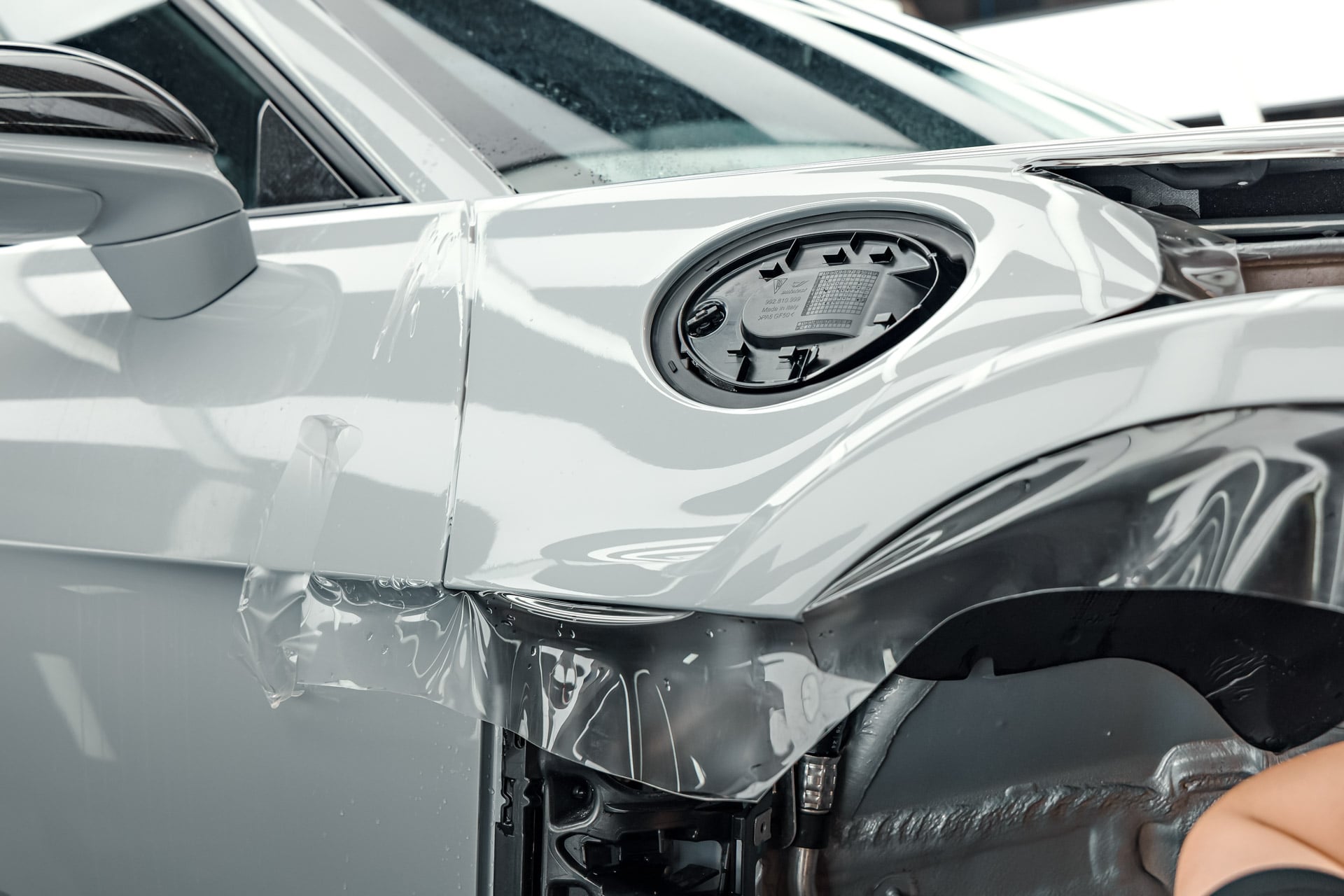
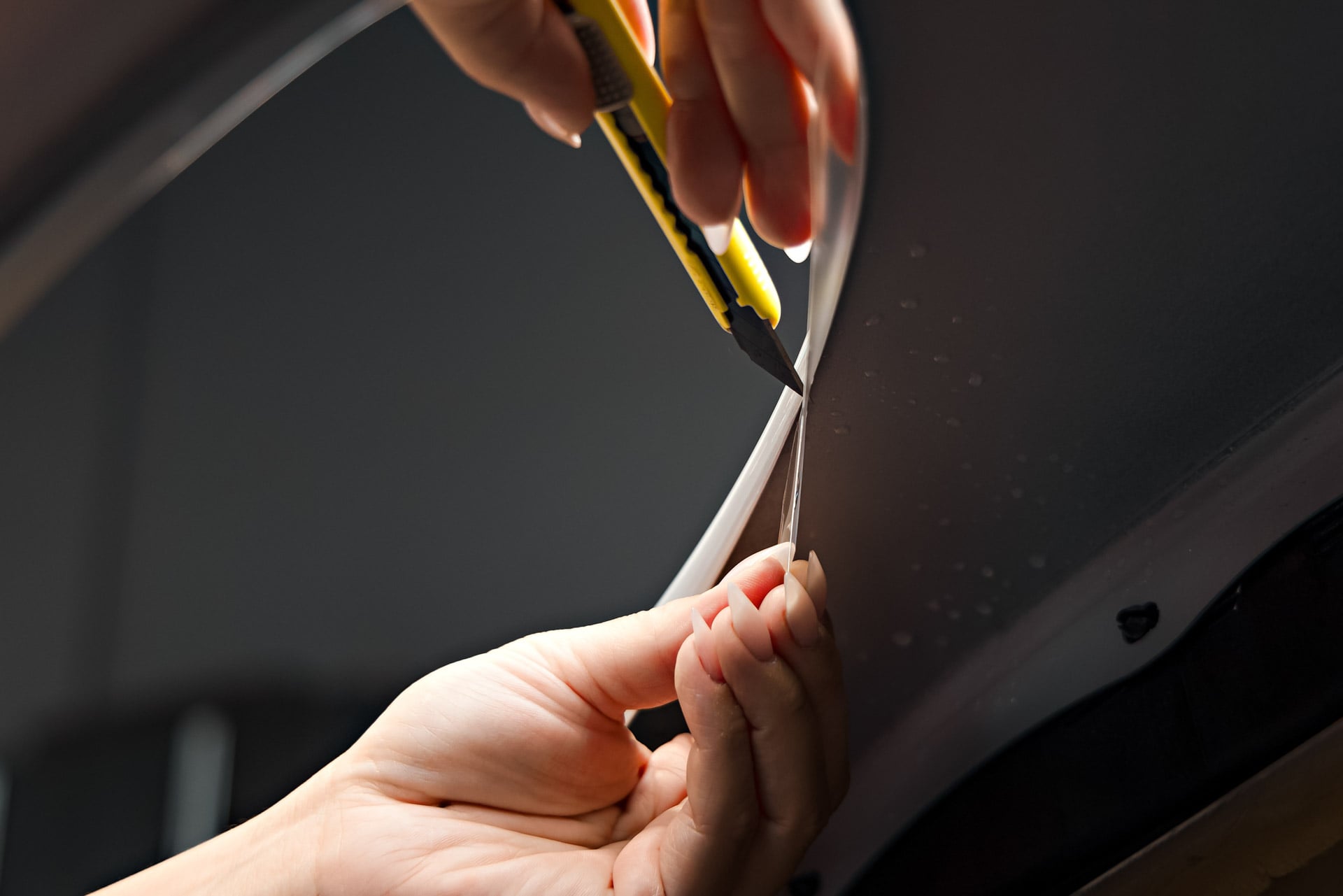
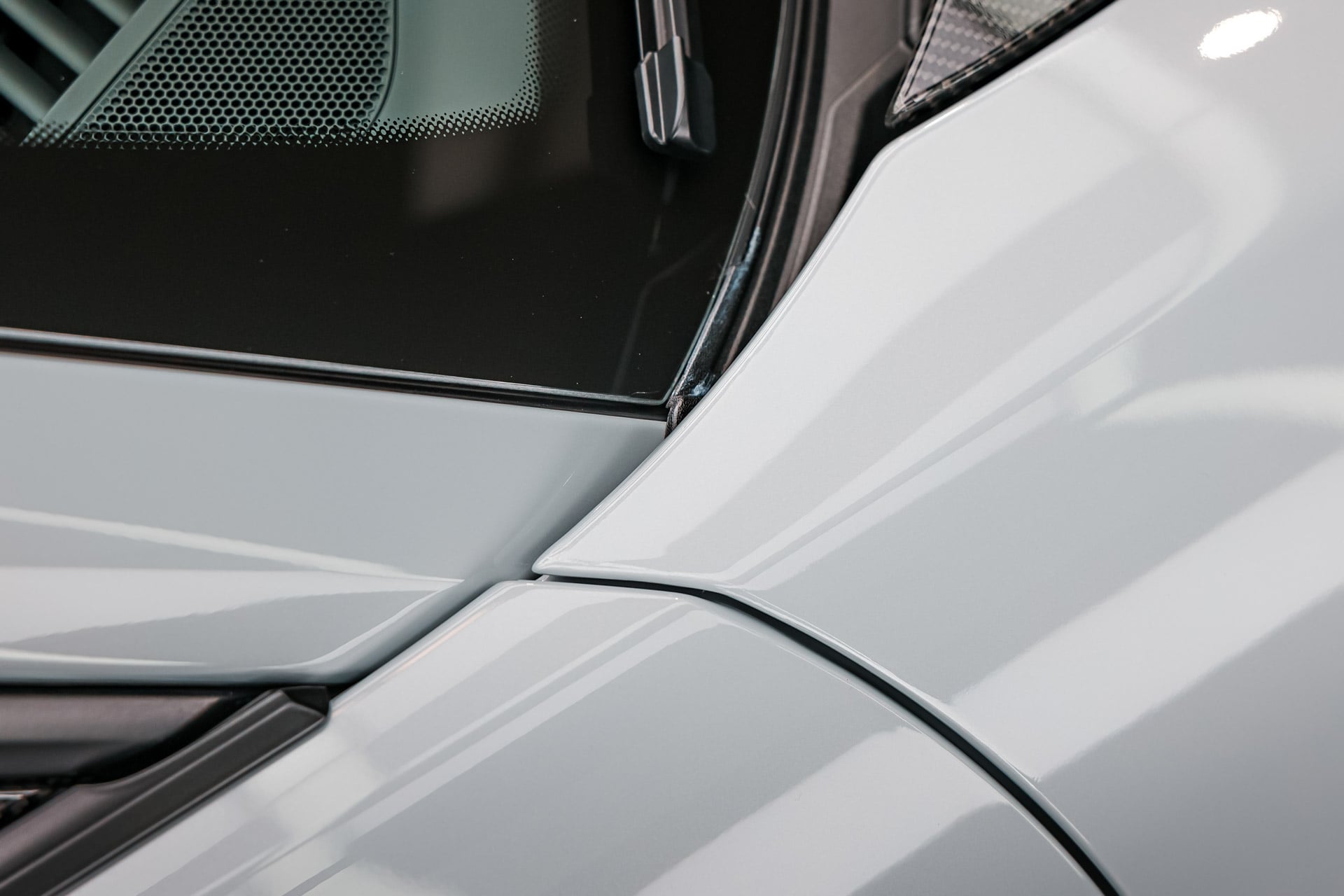
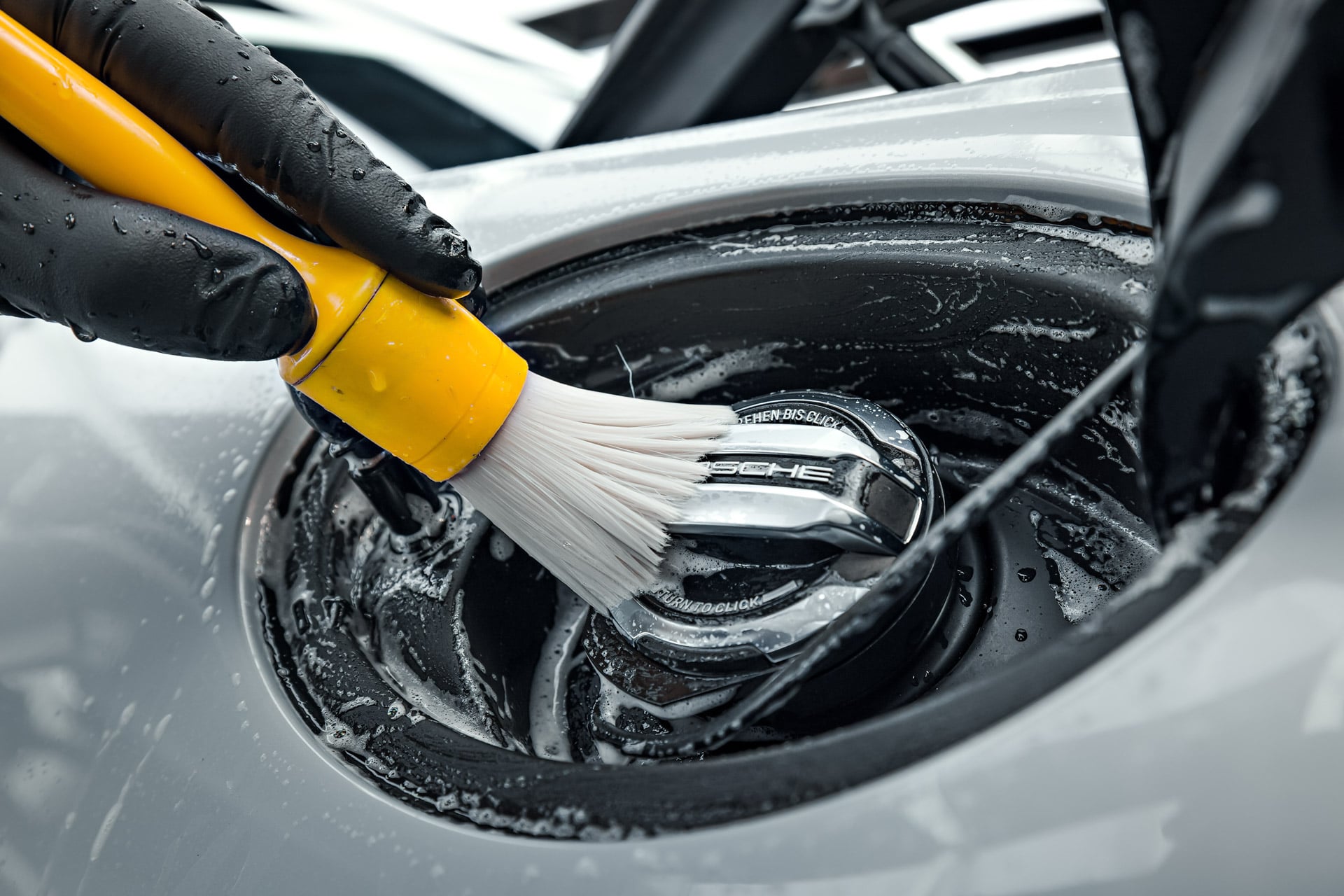
The new installation started with disassembly. Bumpers, lamps, mirrors, door handles, emblems, and trim pieces came off so the film could be tucked and wrapped into the edges of each panel instead of being trimmed in place. That single decision is what makes a bulk install look the way it does. No visible cut line sits a few millimeters short of a door edge, no relief cut sits on a curve, and no exposed strip of paint sits at the perimeter of a panel.
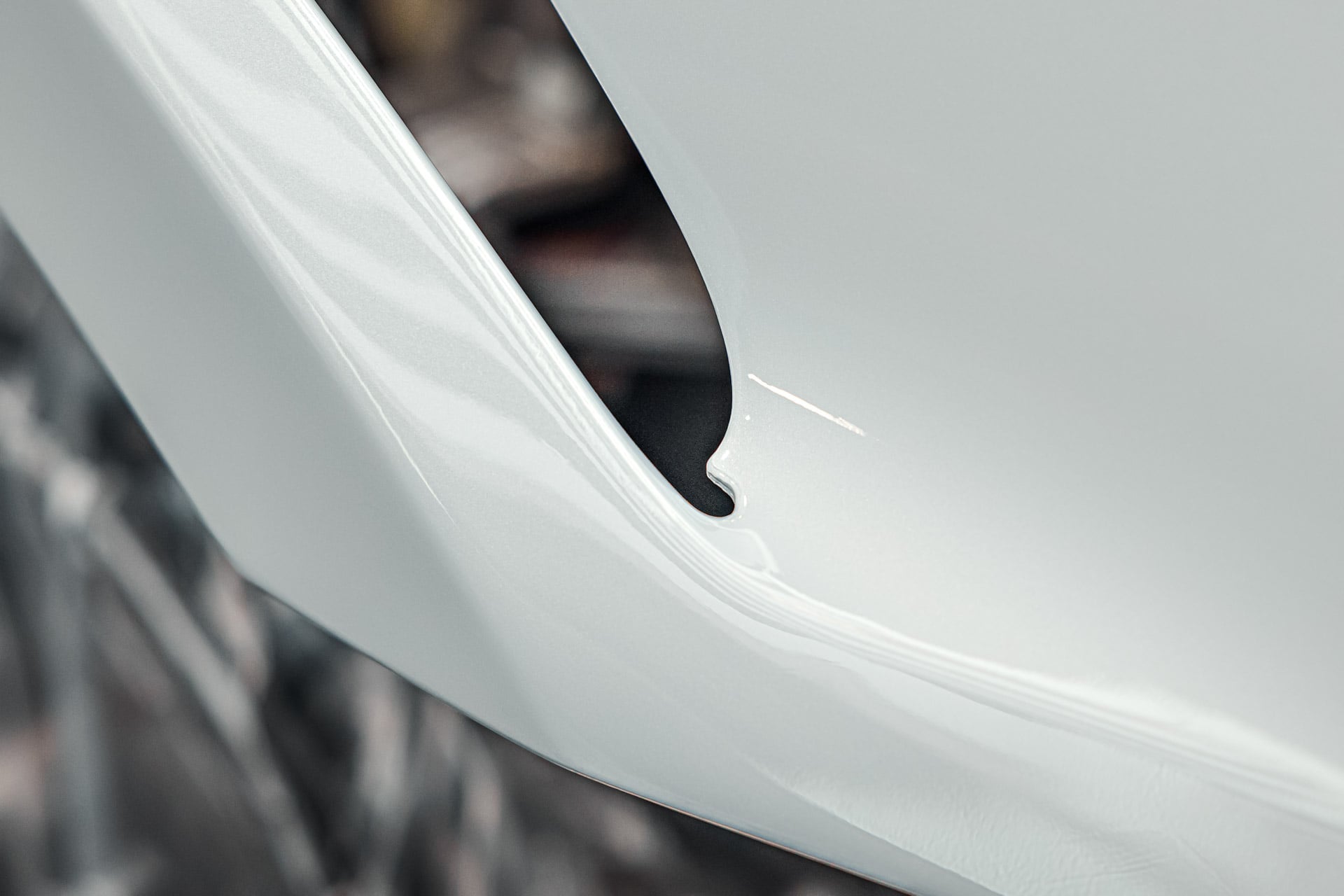
The film itself is XPEL Ultimate Plus, XPEL’s flagship clear paint protection film. It is an 8-mil polyurethane film with a self-healing top coat, so light swirls and fine scratches disappear with heat from the sun or warm water, and it resists rock chips, bug acids, bird droppings, and road tar. XPEL backs it with a 10-year warranty against yellowing, cracking, and peeling when it is installed by an authorized installer such as Bulletproof Auto Spa. We cut it from bulk rolls, shaped it by hand to each panel of this car, and installed it wet, giving our installers time to position, stretch, and settle every section before it grips. Every panel then went through a high-intensity light inspection before sign-off.
For a car that sees spirited driving, the front end is where the film earns its keep. A GT3 RS is designed to be driven hard, and at those speeds a pebble kicked up by traffic on the 405 or the 110 hits with real energy. Ultimate Plus absorbs that impact instead of letting it reach the paint. Because it is optically clear with a high-gloss finish, it also leaves the Arctic Grey paint and the contrast of the visible carbon fiber looking exactly the way Porsche intended. Light solid colors are also the least forgiving of film that hazes or yellows, which is why the 10-year warranty against yellowing matters on a finish like this.
XPEL Exterior Windshield Protection Film
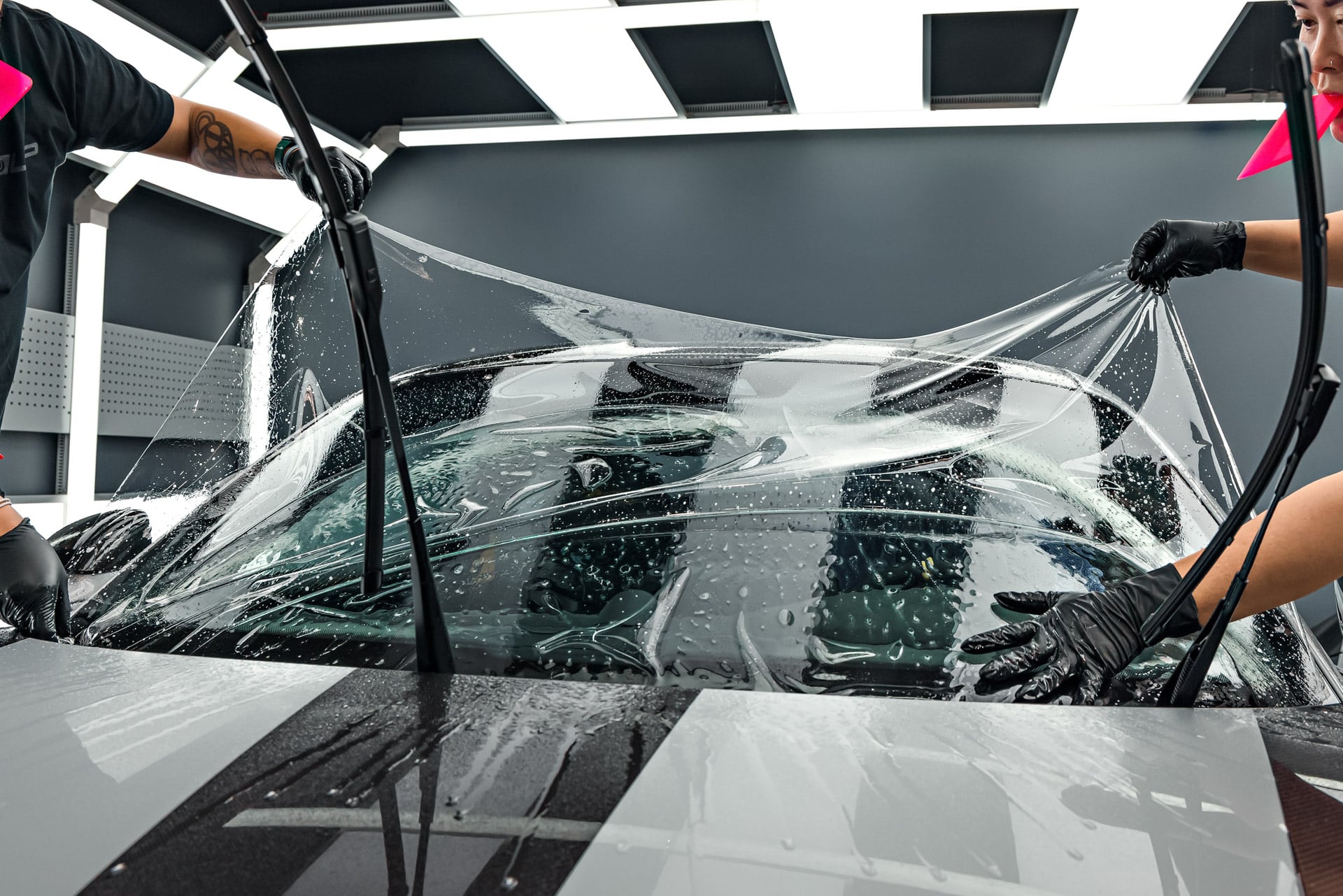
Paint is only half of what the road attacks. The windshield takes the same stones and grit at the same speeds, and glass does not self-heal. For this build, we installed XPEL exterior windshield protection film, a clear, thin film applied to the outside of the glass that resists the pitting, chips, and cracks that lead to replacement. The film has a nano-ceramic hardcoat, stays optically clear without distortion, blocks UV, and is designed not to reduce visibility or interfere with windshield sensors.
The financial case is straightforward. XPEL cites an average windshield replacement cost of around $1,000, and that figure climbs on a high-end vehicle with cameras and sensors that need recalibration afterward. A film that prevents even one replacement pays for itself, and on a car that will spend real time at speed on Southern California freeways, the odds of that happening are higher than most owners expect. Because the film is replaceable, it also takes the damage so the glass underneath does not have to.
The Bulletproof Auto Spa Goal
This GT3 RS Weissach illustrates why installer skill matters as much as the film itself. The same XPEL Ultimate Plus can look average or look invisible, depending entirely on how it is cut, wrapped, and finished. Removing the previous pre-cut film, disassembling the car, and rebuilding the protection from bulk film is the longer road, and it is the only one that makes sense on a car that costs this much and is built this carefully. Add the windshield film, and the car is protected where the road actually hits it, from the glass to the leading edge of every panel. This precision defines every project leaving the Bulletproof Auto Spa facility in Los Angeles.
Take a closer look at the project in the gallery below, and contact us for a free paint inspection and quote for your own vehicle.